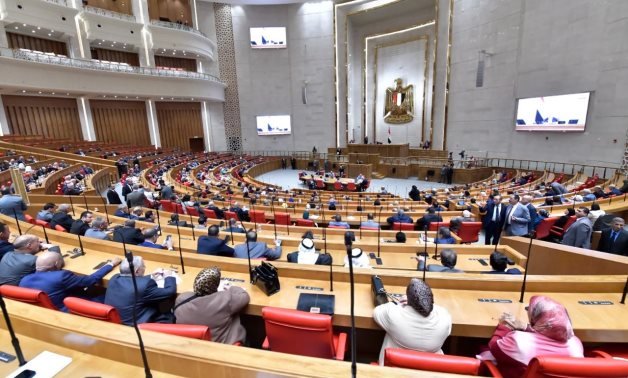
FILE - Egypt's Parliament




CAIRO – 2 July 2025: Egypt's Parliament on Wednesday granted final approval to a draft bill that establishes a specified termination period for rental contracts on thousands of apartments, previously occupied under now-abolished lifetime occupancy rights.
The old law, dating back to the last century, not only allowed tenants to occupy these units for life but also permitted them to pass the leases to heirs at the same, significantly low rental rates—provided they were residing with the original tenant.
Under the draft legislation, presented by the Cabinet, residential leases governed by the old rent system will expire after a seven-year transitional period for residential units, and five years for non-residential premises rented to individuals.
Tenants will be required to vacate the leased premises and return them to landlords at the end of this transitional period. The law explicitly abolishes all previous lease agreements once this period concludes.
Tenants and their heirs covered by the contract will have their units immediately withdrawn by the landlords if they abandon the premises for more than a year without justification or if they own another unit, whether residential or non-residential.
Additionally, the new bill significantly raises the legal rental values for residential properties in privileged areas—up to twenty times the current rates, with a minimum of LE 1,000.
Meanwhile, for units in medium and economic zones, the rental value will increase by ten times the current amount, setting minimums at LE 400 for medium zones and LE 250 for economic zones.
During the transitional period, rents will be subject to an annual increase of 15%.
Resolving Tenant-Landlord Disputes
The new move aims to address long-standing tensions between landlords seeking fair market returns and tenants protected by older rental agreements with fixed, often outdated rates.
For decades, thousands of housing units have been rented at nominal monthly fees as low as LE 5 or 10 (approximately $0.10–$0.20), including properties in downtown Cairo and upscale districts.
Property owners argue that, under the old laws, they derive minimal income while other residential units not covered by the obsolete system are rented at significantly higher rates across the country.
On the other hand, tenants cling to these laws, fearing that landlords may exploit their need for housing by imposing unaffordable rents.
According to Egypt’s state-run statistical agency CAPMAS, as of 2017, around 1.6 million families were living in units subject to the old rental system, including 409,276 families with tenants over the age of 60.
Additional reporting by Samar Samir and Amr Kandil.

Be Social




Comments
Leave a Comment