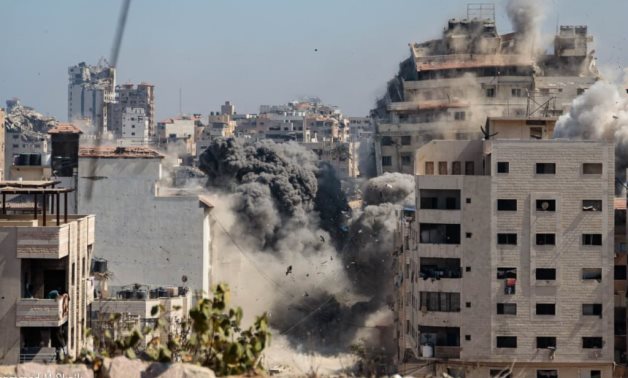




CAIRO – 31 July 2026: The Gaza Peace Council published a document on Friday outlining the roadmap to complete the implementation of U.S. President Donald Trump’s comprehensive peace plan for the Gaza Strip.
The roadmap includes the formation of a national committee to administer the Gaza Strip, the completion of the Israeli military withdrawal, and the launch of a reconstruction process—all governed by a specific timetable and implementation mechanisms.
According to the document, all parties reaffirmed their commitment to the Trump plan alongside UN Security Council Resolution 2803 of 2025 as the governing international framework. The overarching objectives are to end the war, restore normalcy, empower the Palestinian Authority, and launch economic reconstruction—ultimately establishing a credible political process that achieves Palestinian self-determination and statehood.
The document stipulates that Israel must fulfill all remaining obligations under the Sharm el-Sheikh Protocol without delay, chief among them the complete cessation of military operations. In return, Hamas and other Palestinian factions must also cease all military operations. The detailed timetable and implementation mechanisms for Phase 2 will be prepared within 14 days of the roadmap's adoption.
Entry of the National Committee for the Administration of Gaza
The document requires the National Committee for the Administration of Gaza (NCAG) to enter the Gaza Strip immediately upon the completion of implementation mechanisms to assume responsibility for civil governance and public services.
Meanwhile, an International Verification Committee—comprising representatives from guarantor states, the Gaza Peace Council, and the International Stabilization Force—will monitor all parties' compliance before the transition to Phase 2.
The document clarifies that transitions between phases remain contingent upon full verification of each phase's specific commitments. An international monitoring mechanism will also track any violations that could impede implementation.
Furthermore, Hamas and other Palestinian factions agreed to transfer all civil and security administration responsibilities in the Gaza Strip to the NCAG during the transitional phase. This guarantees the committee's independence and prevents factional interference in its work, in accordance with UNSC Resolution 2803.
Regarding financial administration, the document mandates that the NCAG review Gaza’s financial and administrative status, manage public assets and resources, and settle outstanding obligations to suppliers, contractors, and other entities up to a maximum of $400 million. These measures will be implemented gradually over three years, according to priorities set by the committee.
Details of Security Arrangements
The document also details security arrangements for administering the enclave, anchored in the principle of "one authority, one law, and one weapon." This framework requires commencing the dismantling and storage of heavy weapons alongside the gradual withdrawal of Israeli forces.
Under the agreement, the NCAG will assume full responsibility for managing the Gaza Strip during the transitional phase, operating in accordance with Palestinian law, international standards, and principles of good governance. The committee will serve as the sole entity authorized to possess and control weapons in the Gaza Strip upon complete implementation of the roadmap.
The plan stipulates integrating newly trained police personnel into existing police forces following comprehensive vetting. Individuals who do not meet vetting criteria will be offered civilian employment or retirement with guaranteed financial rights and no discrimination based on political affiliation. All police weaponry will be transferred under the authority of the NCAG immediately upon its entry into Gaza.
Dismantling and Storing Heavy Weapons
The dismantling and secure storage of heavy weapons, military production facilities, arms depots, and tunnels will begin once obligations under the Sharm el-Sheikh Protocol are met, the NCAG enters Gaza, and the International Stabilization Force deploys. This process will proceed incrementally based on the timetable established within 14 days of adoption.
Implementation of these demilitarization measures is directly linked to the progressive withdrawal of Israeli forces from areas under their control, with Palestinian factions participating in execution. The document explicitly emphasizes that no weapons will be transferred or handed over to Israel or any non-Palestinian entity.
The NCAG will hold exclusive authority to register, license, and confiscate personal weapons, as well as enforce the law during the transition. All factions, clans, and components of Palestinian society are required to cooperate with the committee.
Additionally, weapons belonging to armed factions will be dismantled and stored according to the agreed timetable, and faction members will not be integrated into security or police forces. The International Verification Committee will oversee compliance.
Deployment of the International Stabilization Force
Regarding international security mechanisms, the document mandates the deployment of an International Stabilization Force (ISF) in the Gaza Strip to separate Israeli forces from areas administered by the NCAG. The ISF's mandate is restricted to monitoring the ceasefire, training Palestinian police, and facilitating humanitarian aid delivery—without exercising policing powers or directly administering Palestinian civil affairs.
Finally, the document affirms that Israeli forces will complete a phased withdrawal from the Gaza Strip according to the agreed schedule, while the NCAG takes responsibility for managing internal security. These measures aim to establish the conditions required for reconstruction and launch a political process empowering the Palestinian Authority to achieve long-term regional stability.

Be Social




Comments
Leave a Comment