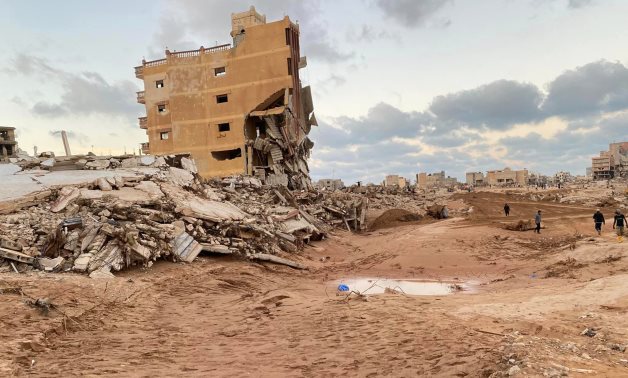
The coastal Derna city in Libya after being struck by a devastating floods and storm- Photo from Abduallah Selim Hamd's Facebook page




Libya is facing a rapid succession of security and political shocks this week, with armed drones striking fuel storage tanks and a power station in the western city of Zawiya, the assassination of a senior military intelligence officer in Benghazi, and the resignation request of the governor of Libya's Central Bank — developments unfolding across the country's west, south and east almost simultaneously.
Drone strikes knock out power in Zawiya
Libya's General Electricity Company said a transformer station south of Zawiya was completely burned out and taken offline, warning that combined damage to the station and to a nearby generation plant could trigger partial or full blackouts if attacks on power infrastructure continue.
The company added that the strikes prompted General Electric to withdraw its technical teams and suspend maintenance work, delaying the return of more than 700 megawatts to the grid, and cautioned that repeated attacks were undermining the stability of the country's electricity system.
Separately, the head of Libya's National Oil Corporation, Masoud Suleiman, inspected the damage from repeated attacks on the fuel tank farm at Zawiya, meeting with firefighting, safety and engineering teams who responded to blazes that broke out in several tanks following the strikes.
UN mission calls for immediate halt to fighting
The United Nations Support Mission in Libya (UNSMIL) strongly condemned the clashes in Zawiya and the nearby town of Sabratha, urging all parties to stop fighting immediately and avoid provocative actions that could escalate tensions further. The mission said the confrontations had endangered civilians, caused deaths and injuries, and inflicted serious damage on private property and critical infrastructure, including the Zawiya refinery.
UNSMIL also noted that the fighting in Sabratha led to a prisoner escape, raising serious concerns for civilian protection and public safety. It called for a prompt, thorough, independent and credible investigation to identify those responsible for the violence and ensure accountability, affirming victims' right to justice.
The mission stressed that all parties must abide by international humanitarian and human rights law, warning against the use of heavy weapons or the positioning of military assets in or near populated areas.
Central Bank governor asks to step down
In a separate political development, Central Bank of Libya Governor Naji Issa submitted a formal request to the speakers of the House of Representatives and the High Council of State asking to be relieved of his post. Libyan media reported that Issa attributed the request to what he described as sensitive reasons, which he said he did not wish to disclose at this time.
Military intelligence chief killed in Benghazi bombing
In Benghazi, the head of Libya's Military Intelligence Department, Major General Fawzi al-Mansouri, was killed when his car was struck by an explosive device in the city's Al-Hawari area. According to initial reports, the blast occurred as al-Mansouri was leaving evening prayers, with local sources saying the explosion targeted his vehicle near the Sayeda Aisha neighborhood. The circumstances of the attack and the identity of those responsible remain unclear, and security authorities have opened an investigation.
A security committee formed on the orders of Libyan National Army commander Field Marshal Khalifa Haftar has begun investigating the assassination. The committee includes several senior military and security figures and is being directly overseen by the army's deputy commander, Lieutenant General Saddam Haftar, who stressed the need to intensify efforts to uncover the circumstances of the killing, identify those responsible, and take the necessary legal action against them.
These simultaneous developments come as Libya faces heightened security and political tension, with growing calls for de-escalation, protection of critical infrastructure and civilians, and containment of the fighting before it spreads further.

Be Social




Comments
Leave a Comment