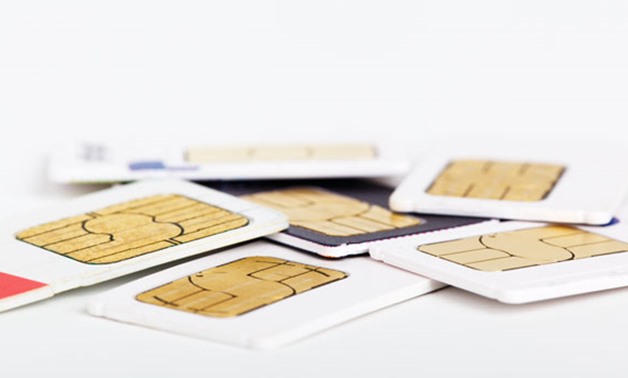
FILE - SIM Cards




CAIRO – 12 August 2026: Millions of Egyptians, including me, are concerned about the misuse of their personal data by mobile operators, fearing that they could face imprisonment or other penalties for crimes they never committed simply because mobile SIM cards were wrongfully registered in their names.
Thousands of social media users have shared their experiences with telecommunications companies, including Etisalat, Vodafone, and Orange, complaining that their personal data had been used to register SIM cards without their knowledge or consent.
The concerns emerged after an Information Systems student in Sharqia Governorate was sentenced to 25 years in prison on drug-trafficking charges. He was handed the sentence after a SIM card registered in his name was allegedly used by another drug dealer.
Following news of the student’s imprisonment, other people checked the mobile numbers registered under their names through “My NTRA,” the mobile application of Egypt’s National Telecommunications Regulatory Authority (NTRA). Many discovered that several numbers had been registered in their names without their knowledge or consent. They called on the government to take action against telecommunications companies and investigate how their personal data had been misused.
Another problem is that some numbers are registered in a citizen’s name but are owned by a business entity. In this case, the operator rejects to cancel the number because it is associated to an entity that should give permission to deactivate the number/s.
Engineer Mohamed Ibrahim, spokesperson for NTRA, told Al-Arabiya Business on August 11 that the authority had received more than 4,000 complaints so far. Ibrahim confirmed that complaints concerning mobile numbers registered to citizens’ national ID cards without their knowledge or possession are currently being investigated and verified.
Mohamed Maghraby, an artificial intelligence and technology security expert, told Al-Masry Al-Youm newspaper that some employees at telecommunications companies may misuse customers’ national ID information to activate additional SIM cards and then sell them on the black market to meet what they refer to as their “sales targets.”
In response, the NTRA announced on Monday that it has referred the country’s four mobile operators—Etisalat, Vodafone, Orange, and WE—to the Public Prosecution for investigations over violations involving the registration of mobile phone numbers using citizens’ personal data without their knowledge or consent.
The move follows the NTRA’s examination and inspection of complaints received over the past two days, as well as the collection of relevant evidence and documents and the completion of the necessary legal procedures.
The operating companies have not yet issued any comments or statements. However, their call center agents indicated that the company could provide a non-possession document for the mobile numbers, but would refuse to issue any document confirming that the numbers are not owned by the company.
My own experience
On June 2, I discovered through the My NTRA app that there were two mobile numbers registered in my name that I knew nothing about.
I went to an Etisalat branch that same day and was advised to call the numbers to find out whether someone else was using them. I did so and discovered that both numbers were being used by someone I did not know.
I was then told by the company that there had been a mix-up in the numbers at the sale stage in supermarkets. I was also told that I could simply cancel the numbers and deactivate them if I wanted to. My response was: How could I guarantee that no one would misuse these numbers registered in my name? And how could I be expected to cancel numbers that I had never purchased in the first place? The person using the lines refused to come to the branch and claim ownership because he was in another governorate and did not want to make the trip. He said he did not object to canceling the lines. I therefore canceled them that same day.
Then, through the My NTRA app, I discovered another Vodafone number registered in my name—again, a number that was not mine. I called the number, and a man from another governorate answered. When I told him that I intended to cancel the number, he asked me to wait because his bank accounts were linked to the number and he had been using it for five years.
I told him to come to the branch at any time so that I would transfer ownership of the number to him. I waited for a long time. Every time I called him, he told me that he would get back to me by the end of the week. Eventually, on August 4, I decided to cancel the number.
Throughout this entire process, I was unaware that I was required to formally deny ownership of the numbers. More importantly, the company did not inform me that I needed to take this additional step when I reported and canceled the numbers that I had never owned. I therefore returned to the branches of the two companies where I had canceled the numbers and asked for documentation confirming that the numbers were never in my possession before their cancellation.
The Etisalat company told me that it would file a complaint requesting a formal denial of ownership and that the matter would be resolved within 24 hours. Vodafone, however, refused to provide me with any documentation confirming that I had canceled the number on August 4. I was also told that I would have to go to Vodafone's headquarters in Smart Village and request such documentation from the company's legal department.
In other words, I am now being asked to spend my own time, money, and effort to prove that I did not own mobile numbers that were registered in my name without my knowledge. If this resulted from mistakes made during the sale or registration of these lines, why should the customer bear the consequences?
I was also told that the mix-up occurred because of the way numbers were being sold in supermarkets. If employees or sales representatives were registering numbers under customers' data in order to meet sales targets, then this raises an even more serious question: Who is monitoring the misuse of customers' personal data, and who is held accountable when it happens?
Because I cannot guarantee that these numbers were never misused before they were canceled, I decided to take an additional precaution. I went to the Telecommunications Police Station in Ramses and filed a report stating that I had no knowledge of these numbers before their cancellation dates.
The entire situation is absolutely ridiculous.
There must be much stronger oversight of telecommunications companies, as well as regular and effective monitoring by the National Telecom Regulatory Authority (NTRA) to ensure that customers' personal data cannot be used to register mobile numbers without their knowledge or consent.
Customers should not discover by chance that unknown mobile numbers are registered under their national ID numbers. And when such a situation is discovered, the customer should not be required to spend weeks or months proving that they were not responsible for a registration they never requested.
There is also another issue that deserves urgent attention. Before any telecommunications company or bank opens a bank account or e-wallets, or takes any action that could affect access to financial services, customers should be required to provide documentation confirming that the mobile number registered with the bank or financial service actually belongs to the account holder.
The protection of customers' personal data should not depend on customers discovering mistakes. There must be clear accountability, proper verification procedures, and an efficient mechanism for correcting such errors without placing the burden on the customer.
What did NTRA say?
In response to thousands of complaints, the National Telecommunications Regulatory Authority (NTRA) issued its first statement addressing concerns over mobile numbers registered in citizens’ names without their knowledge.
To protect users’ rights and reassure citizens, the NTRA clarified the following:
First: If a citizen discovers a mobile phone number registered in their name that does not belong to them, they have the right to file a complaint with the NTRA. The Authority will examine the complaint, verify the validity of the registration procedures, and determine whether the telecommunications company complied with the applicable regulatory requirements. If any violation is proven, the NTRA will take the necessary measures. Citizens also retain the right to report the matter to the competent investigative authorities whenever they deem it necessary.
Second: The NTRA assured citizens that having a mobile number registered in a person’s name does not, by itself, make that person legally responsible for actions committed using the number, provided it is established that the line does not belong to them, is not in their possession, or is not under their actual control.
The Authority stressed that legal responsibility is personal and that acts cannot be attributed to anyone other than the person who committed them. Responsibility is determined based on the facts, evidence, and findings of investigations.
Third: The NTRA said it is continuing to review and develop the regulations governing the registration and activation of mobile phone numbers. It is also intensifying its audits and inspections of telecommunications companies and imposing the prescribed measures and penalties for any violations.
The Authority added that it is working to strengthen user identity-verification procedures, including the use of biometric verification systems, to improve the accuracy of registration data and enhance the security and safety of telecommunications services.
The NTRA urged citizens to regularly check the numbers registered under their names through the “My NTRA” application and immediately report any unfamiliar numbers.
The Authority reaffirmed its commitment to taking all necessary measures to protect citizens’ rights and ensure the security of Egypt’s telecommunications system.
Complaints regarding this issue can be submitted to the NTRA through the following channels:
What should you do if you find other numbers registered under your name?
Citizens should first file a complaint with the relevant mobile operator or branch, stating that the number does not belong to them and requesting its cancellation. They should also obtain an official document from the mobile operator confirming that they do not own the number. If the issue is not resolved, citizens should then file a complaint with the National Telecommunications Regulatory Authority (NTRA), said Doaa Omar, an Egyptian legal expert, in comments to Egypt Today.
Omar added that citizens have the right to seek compensation if they suffer any harm caused by an individual or legal entity. Under Egyptian civil law, a compensation claim may be pursued when its key elements are established: fault, damage, and a causal link between the two.
In such cases, citizens may be awarded compensation if the damage is proven. “This issue is seriously critical,” she stressed, noting that the current situation could be linked to earlier practices in which thousands of SIM cards were sold on the streets.
Omar also advised citizens to file a complaint against the mobile operators with the Telecommunications Police Department in downtown Cairo.
What is the fate of the mobile operators?
Lawyer at the Court of Cassation and the Supreme Constitution Court Amr Abdel Salam said in comments to Masrawy that the potential charges that face the operators could include the collection, processing, disclosure, provision, and use of citizens’ personal data in service contracts without their knowledge, consent, or approval, thereby exposing them to potential risks or harm in exchange for financial gains for company officials or employees.
He explained that such acts are criminalized under Article 36 of Law No. 151 of 2020 on the Protection of Personal Data and may be punishable by imprisonment for up to three years and a fine of up to LE 2 million.
He pointed out that Articles 36, 37, and 38 of the Personal Data Protection Law prescribe penalties for anyone who possesses, controls, or processes electronic personal data without legal authorization or the consent of the data subject. According to Abdel Salam, penalties may include fines ranging from LE 100,000 to LE 1 million. In cases where the offense is committed in exchange for material or moral gain, or with the intent of endangering or harming the data subject, the penalty may include imprisonment for no less than six months and a fine ranging from LE 200,000 to LE 2 million, or either of the two penalties.
He added that citizens also have the right to take legal action and seek compensation from the responsible company for any material or moral damages they have suffered.

Be Social




Comments
Leave a Comment