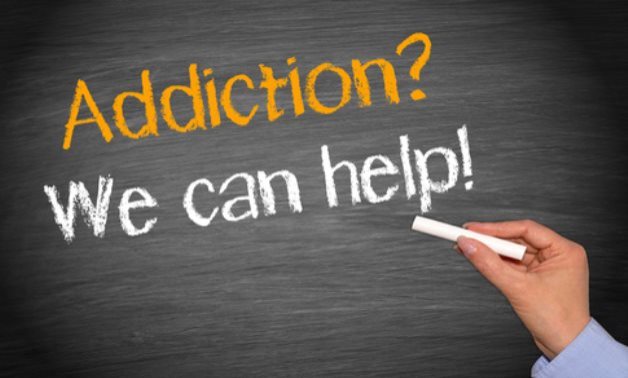
Addiction - File




CAIRO – 17 August 2026: Dr. Amr Othman, Director of the Fund for Combating and Treating Addiction and Substance Abuse, announced the opening of applications for the Drug Demand Reduction Diploma at Cairo University for the 2026/2027 academic year.
Applications will be accepted until August 31, 2026. The diploma, offered in partnership with the Department of Psychology at Cairo University's Faculty of Arts, aims to prepare qualified professionals to work in addiction prevention and treatment. The program is being offered for the tenth consecutive year.
The Fund previously employed all graduates of the first cohort of the Drug Demand Reduction Diploma at its Al-Azima Centers, state-run addiction treatment and rehabilitation facilities in Egypt. It has also recruited top graduates from subsequent cohorts.
Othman said applications are being accepted at the Graduate Studies Department of Cairo University's Faculty of Arts until August 31. Applications will only be accepted through the department. The list of eligible applicants for the entrance examinations and the examination schedule will be announced at a later date.
Applicants holding a bachelor's degree in Psychology or Sociology from a Faculty of Arts or Social Sciences, or an equivalent qualification, are eligible to apply. Applicants holding a Bachelor of Medicine degree with a minimum grade of “Good” are also eligible.
Applicants will be required to sit a written examination covering addiction and substance abuse and pass a personal interview conducted by the Department of Psychology.
The program is taught by a highly qualified and specialized faculty comprising professors of psychology, psychiatry, and sociology. The curriculum covers substance use disorders and their impact on mental health from various scientific perspectives, providing a comprehensive approach that integrates different academic disciplines.
The program also includes 300 hours of practical training throughout the academic year. The training aims to prepare qualified professionals to work in the field of drug demand reduction, enhance the role of scientific research in addressing addiction, and bridge the gap between theoretical knowledge and practical experience in prevention, treatment, and rehabilitation.

Be Social




Comments
Leave a Comment