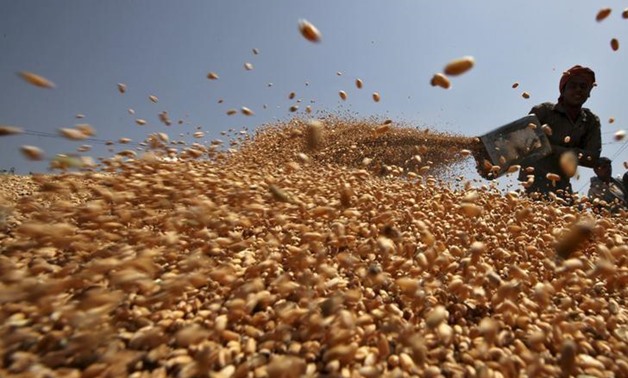
Wheat at the field- Reuters
CAIRO - 23 August 2026: With the conclusion of the wheat procurement season, Egypt is expected to remain the Arab world’s leading wheat producer in 2026, according to estimates by the Food and Agriculture Organization of the United Nations (FAO).
The Egyptian Cabinet’s Media Center published infographics on its social media platforms highlighting FAO estimates for wheat production across Arab countries. The figures indicate that Egypt’s wheat production is expected to reach 10.2 million tons in 2026, making it the largest producer in the Arab world. Morocco and Iraq are projected to follow with 5 million tons each, followed by Algeria with approximately 3.5 million tons, Tunisia with 1.4 million tons, and Saudi Arabia with 1.1 million tons.
According to the FAO estimates, Egypt’s wheat production is expected to increase by approximately 7 percent in 2026 compared with the average production level, mainly driven by the expansion of cultivated areas.
Domestic wheat production is also projected to rise by 6.5 percent, exceeding 10 million tons in 2026, compared with 9.4 million tons in 2025. This increase is expected to contribute to a decline in wheat imports to approximately 12.5 million tons, down from around 13.2 million tons the previous year.
The expansion in production has been supported by an increase in the cultivated wheat area to 3.76 million feddans, representing a record increase of 600,000 feddans compared with the previous season. Meanwhile, the total quantity of wheat delivered under the government procurement system reached approximately 5 million tons by the end of the procurement season, the highest level ever recorded.
As part of efforts to encourage farmers, the government set the wheat procurement price at LE 2,500 per ardeb, following directives from President Abdel Fattah El-Sisi. The increase in production has coincided with the development and wider adoption of high-yielding, climate-tolerant wheat varieties, including Misr 3, Misr 4, Giza 171, Sakha 95, Sakha 96, Seds 14, Seds 15, Beni Suef 5, Beni Suef 7, Sohag 5, and Sohag 6.
These measures are aimed at increasing domestic wheat production, improving productivity, strengthening food security, and reducing Egypt’s reliance on imports.








Comments
Leave a Comment