




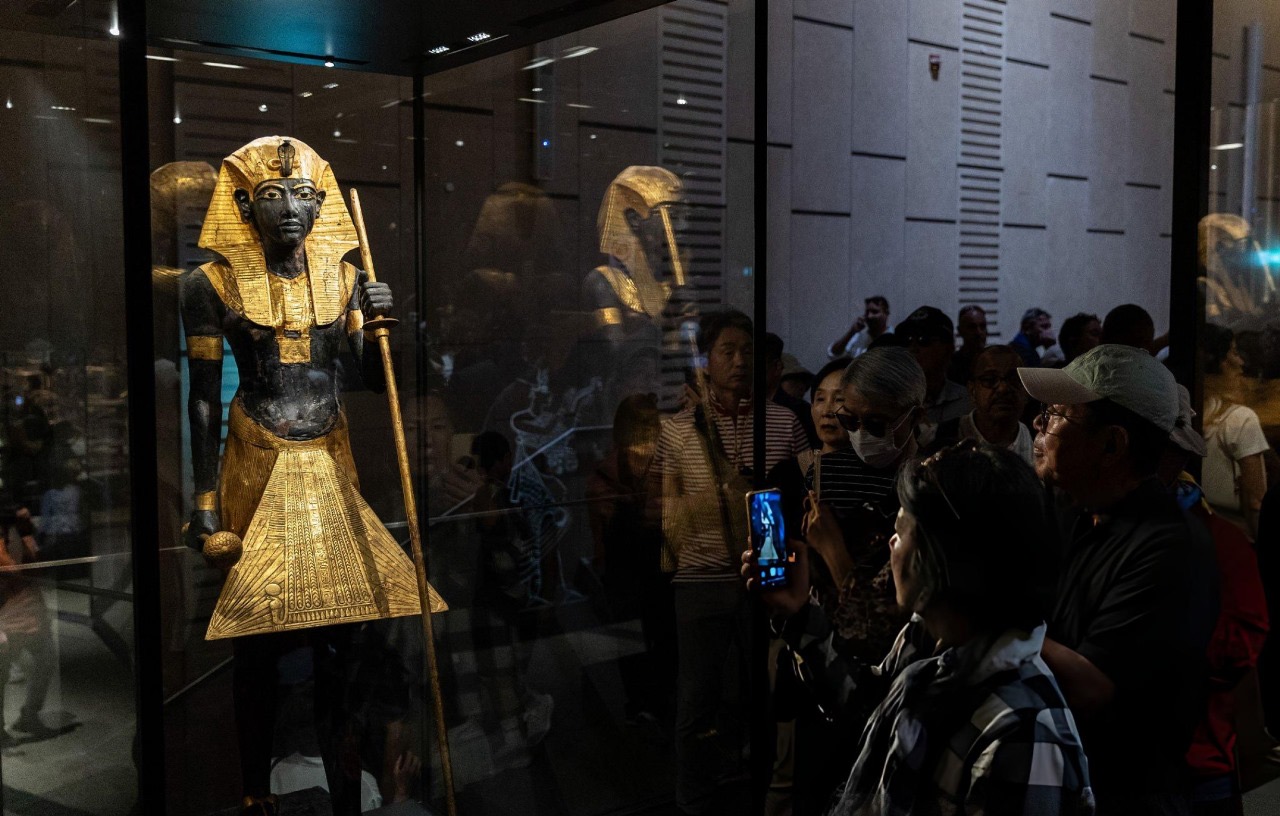
For the first time, the complete treasures of King Tutankhamun will be displayed together in one place. More than 5,000 artifacts belonging to the Golden Pharaoh will be showcased inside the Grand Egyptian Museum, which will officially open on November 1 and welcome the public starting November 4.
Among the most anticipated exhibits is the golden coffin of the young king himself, unseen since Howard Carter discovered it in his tomb in 1922.
Another highlight is the rare floral necklace, one of Tutankhamun’s most precious treasures, kept in storage for over 90 years before a meticulous team of conservators restored it to its original splendor using fine linen threads that bring back the brilliance it once had in the days of the pharaohs.
The King Tut Gallery inside the museum has been fitted with the latest display and lighting technology across an impressive 7,500 square meters, ready to showcase his golden coffins, chariots, and royal jewelry — each piece shining as it tells its timeless story.
The complete collection of the golden pharaoh is one of the museum’s greatest treasures. For the first time, all of Tutankhamun’s belongings will be displayed together under one roof, including several items presented to the public for the first time. The collection comprises 5,398 artifacts that have undergone meticulous restoration and conservation before being prepared for display.
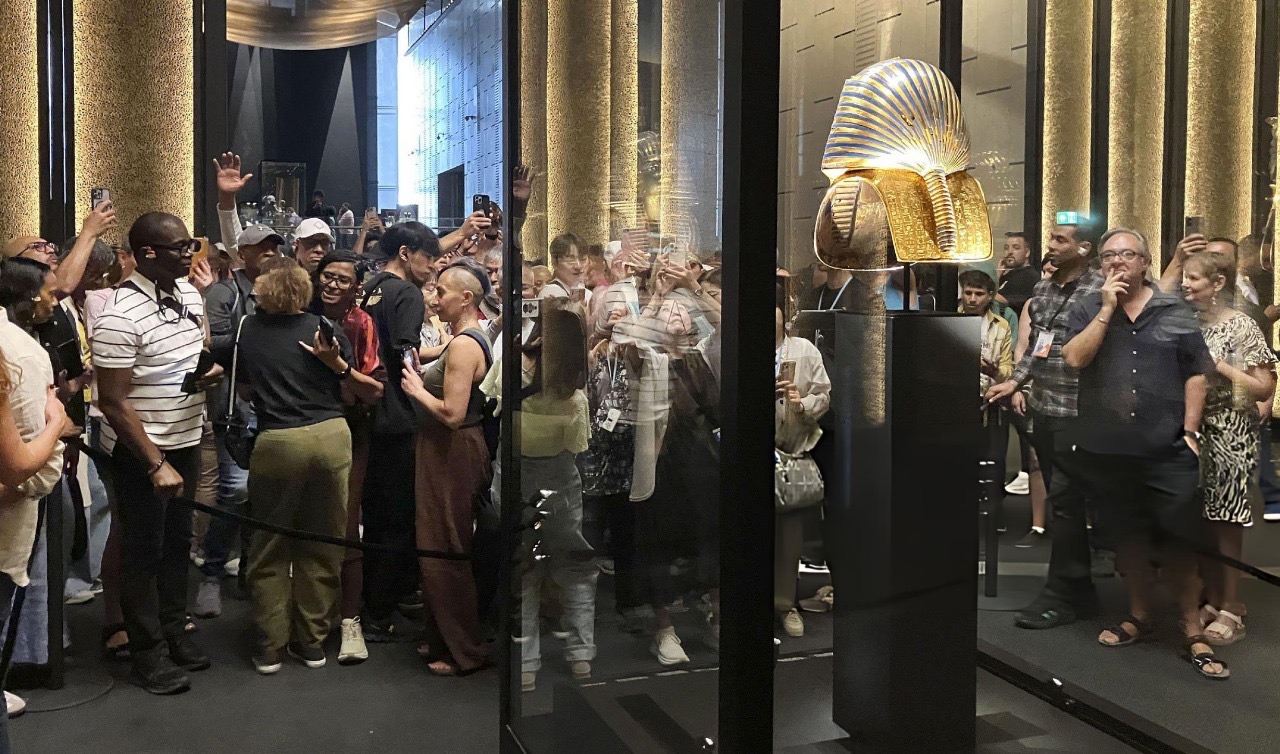
Among the highlights are the golden mask, the ceremonial chariot, and the grand gilded shrine for the canopic jars. The museum also features 500 pieces from the boy king’s tomb being revealed for the first time, transferred from other Egyptian museums.
Visitors will see the famous ceremonial chair discovered in the passage leading to Tutankhamun’s tomb, along with his gilded wooden canopic shrine and a stunning selection of jewelry made of gold and carnelian. The chair is a masterpiece of New Kingdom art, inlaid with ivory, ebony, faience, and gold. At its center, the sun disk is depicted above the goddess Nekhbet spreading her wings, while the footrest shows Egypt’s nine traditional enemies in gold leaf relief.
Displaying Tutankhamun’s entire tomb collection in one place for the first time is a global achievement that sets the Grand Egyptian Museum apart. The two vast halls, each covering 7,000 square meters, will feature more than 5,300 artifacts sourced from the Egyptian Museum in Tahrir, Luxor Museum, and the Military Museum, accompanied by immersive virtual presentations about the discovery.
Tutankhamun’s golden mask, the most valuable artifact in the world, stands as a symbol of Egypt alongside the Great Pyramid, the only surviving wonder of the ancient world. The mask holds deep religious and funerary significance, believed to protect the deceased and guide his soul to the afterlife. Its inscriptions from the Book of the Dead reflect divine protection, unity, and royal divinity, encapsulating ancient Egyptian beliefs in life after death.
Tutankhamun’s treasures represent the most complete royal collection ever found, unmatched in craftsmanship and beauty, created during the height of the New Kingdom when Egypt flourished through trade and conquest.

Be Social




Comments
Leave a Comment